Safety Kits Strengthen Culture of Safety for Mechanical Engineering Students
December 10, 2025
By Tracie Troha
The George W. Woodruff School of Mechanical Engineering has launched a new safety initiative that equips students with personal safety kits designed to support their work in makerspaces, machine shops, laboratories, and other experiential learning environments. The effort was funded through a gift from Mark and Jackie Ligler, whose commitment to student safety helped move the project from discussion to reality.
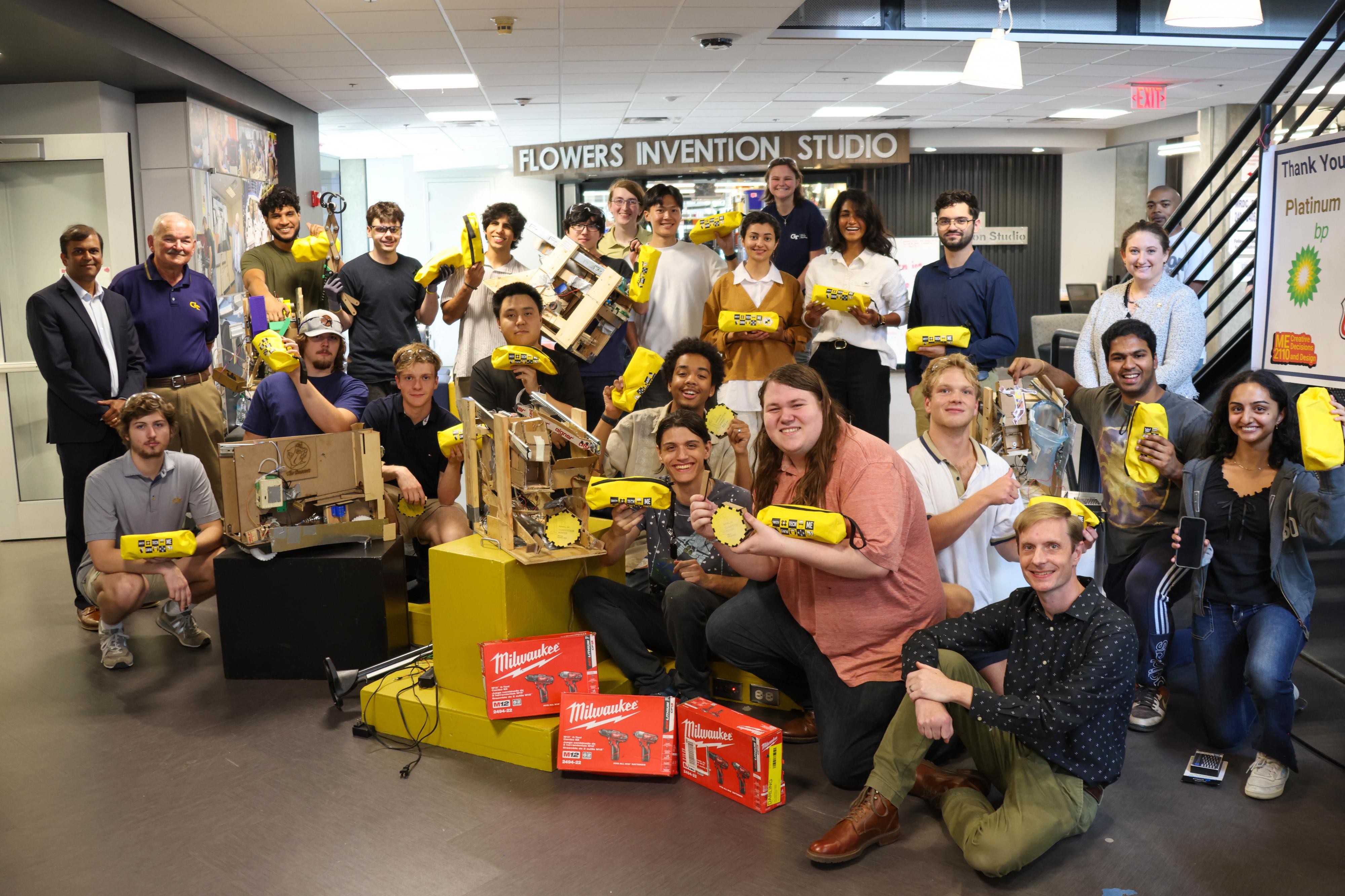
The first kits were distributed to 18 students enrolled in the summer section of ME 2110, the School’s second-year design/build course. By fall, the rollout expanded to more than 280 students in the course, along with 60 student leaders who attended the Experiential Learning Leadership Summit in October.
Alumnus Mark Ligler, ME 1976, said the goal is to ensure students carry essential safety tools with them throughout their academic journey.
“We’re giving the kits to all the second-year students now so that, in three years, all the undergrads will be equipped with them,” he said.
Ligler, a member of the Woodruff School Advisory Board and the School’s safety committee, said the idea for the personal safety kits emerged after conducting safety audits of research labs and makerspaces and holding several discussions with the safety committee.
“Safety was and is a big thing to me,” he said. “A culture of safety is crucial for the ethical use of equipment and for fostering innovation.”
When discussions turned to how to pay for the kits, Ligler drew on lessons from his career leading engineering teams. Now retired, Ligler was co-owner and vice president of the Atlanta-based Factory Automation Systems.
“As a manager of engineers, something I learned a long time ago is you have to get rid of the excuses or, as I call them, the crutches,” he said. “So, becoming aware of the challenge of resources for safety initiatives opened up the opportunity to contribute to the culture of the School. I talked to Jackie, and we decided that we would begin to fund this.”
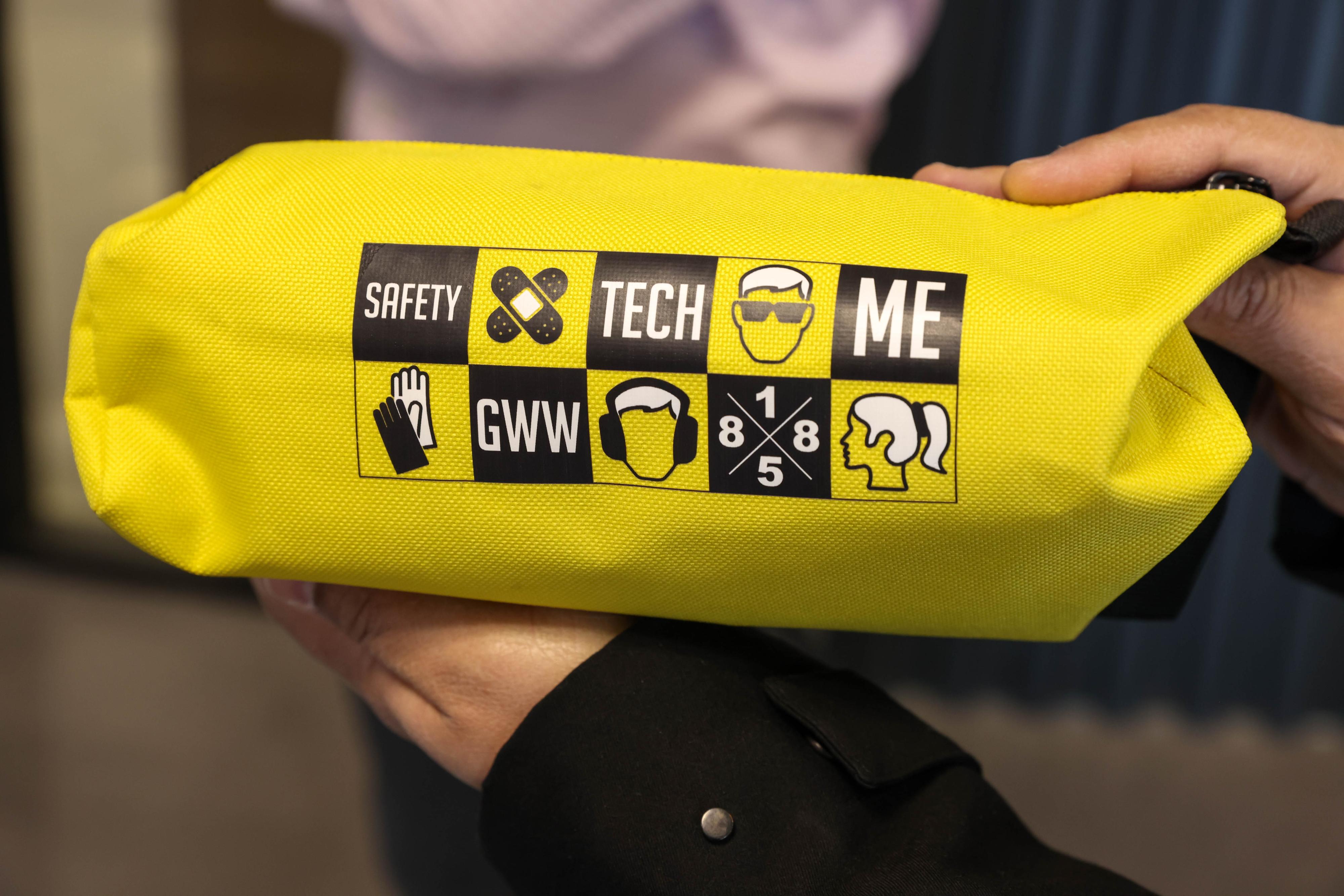
Each safety kit contains safety glasses, earplugs, work gloves, disposable gloves, elastic bands for securing hair and clothing, adhesive bandages and a carabiner that allows the pouch to be clipped onto a bag or belt loop.
“It’s all about protecting the ears, eyes, hands and getting clothing out of the way to ensure best practices in labs and makerspaces,” Ligler said.
His wife, Jackie, a retired nurse, helped select items for the kits and recommended adding simple first-aid items.
Amit Jariwala, director of design, innovation and experiential learning, helped lead the design and implementation of the kits. After meeting with the Liglers in late 2024, he worked with faculty, staff and students to test different pouch styles, survey students and refine the contents.
Some of the faculty and staff involved in creating the safety kits included Mechanical Engineer III Jacob Tompkins, who did the creative design of the kit bag; ME 2110 instructor Marty Jacobsen and Frank K. Webb Academic Professional Chair in Communication Skills Jill Fennell, who provided faculty input; and Lab and Facilities Coordinator Megan Darling, who helped with assembly and distribution to the students.
“In every step in the process of making the kits, we got feedback from students and faculty,” Jariwala said.
Jariwala incorporated the kits into his summer ME 2110 course, requiring students to bring them to every lab session.
Student feedback has underscored the kits’ value.
“I personally have used the safety glasses most frequently,” said graduate student Lena Moller.
She noted that communal glasses in makerspaces often ran out or didn’t fit properly, making the personal kit especially helpful. The kits, she added, give students “something that they can take ownership over.”
As the program expands, students will have opportunities to customize their kits to create a sense of identity and pride within the School.
Jariwala said the goal is to make the kits a part of the Woodruff School's culture, much like the iconic RAT cap, signaling a shared commitment to safety at the School.
To donate to the safety kit initiative, contact Senior Director of Development Jaimie Hayes at jaimie.hayes@me.gatech.edu.
All gifts to the safety kit initiative are included in Transforming Tomorrow: The Campaign for Georgia Tech, a more than $2 billion comprehensive campaign through 2027 designed to secure the resources that will advance the Institute and its impact — on people’s lives, on the way we work together to create innovative solutions, and on our world — for decades to come.